Key features
- Dual-Output Capability: Both acceleration and displacement measurements are available, offering comprehensive monitoring.
- Resistant to Electromagnetic Interferences: Ideal for environments under high electromagnetic influence, ensuring accurate measurements without interference.
- Electrical Insulation: Provides excellent electrical insulation (>65kVrms), ensuring safe operation in high-voltage environments.
- Extended Temperature Range: Exceptional resistance to temperature variations, functioning reliably up to 155°C.
- Variety of Models: Including FAS-1xx M2, FAS-1xx M5 (with ATEX certification), and FAS-200 with single or dual axis options and extended frequency range.
- Fiberoptic Cable: Providing flexibility and ease of installation across various settings.
Description
The FAS sensors are adeptly designed for effective vibration monitoring in power generators, particularly crucial in turbo and hydro generators where end-winding vibrations can lead to significant maintenance challenges. The FAS series, including the advanced FAS-200 model and its predecessors, is characterized by its non-conductive nature, making it immune to electromagnetic interferences — a vital feature for accurate measurements in high electromagnetic fields.
The FAS-200 stands out with its ability to detect acceleration amplitudes ranging from 0 to 40 g. At 100 Hz, this sensitivity corresponds to displacements between 0 to 1 mm, making it highly effective for precise monitoring of mechanical vibrations. Additionally, the FAS-200 can detect vibrations with frequencies between 5 Hz and 1000 Hz, limited by the -3 dB range of the bandpass filter in the readout electronics, ensuring comprehensive monitoring of a wide frequency spectrum.
Whether it’s the FAS-200 with its monolithic sensing element or the earlier models, each sensor in the FAS series brings robustness, precision, and reliability to the table. With options like dual-axis monitoring and ATEX certification, the FAS series caters to a wide range of industrial applications. The fiberoptic cable attached to each model facilitates versatile and straightforward installation across diverse settings.
In essence, MC-monitoring’s Fiberoptic Acceleration Sensors embody the fusion of cutting-edge innovation and practical functionality, making them an indispensable asset for a variety of industrial monitoring needs.
Installation
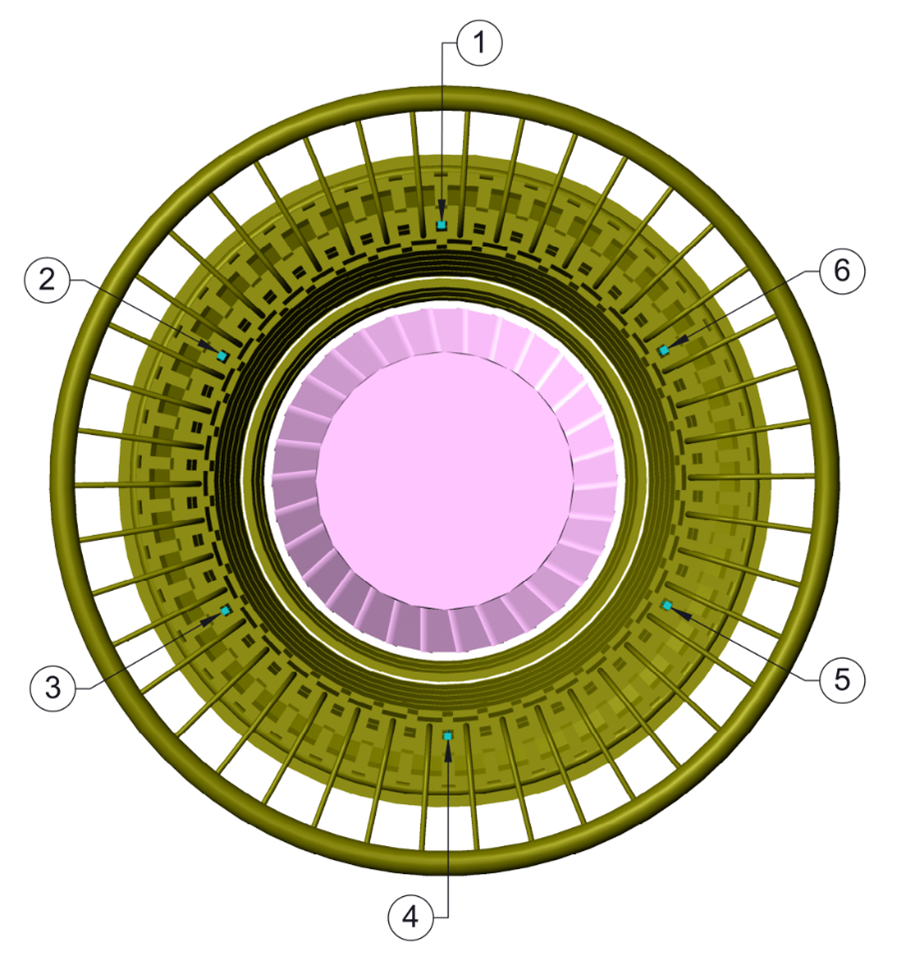
The installation of the sensor is tailored to fit the specific requirements of your generator. Typically, 6 to 9 sensors are installed uniformly around the endwinding in the radial direction on each side, depending on the generator size. A bump test is recommended to identify the optimal sensor locations for accurate vibration detection.
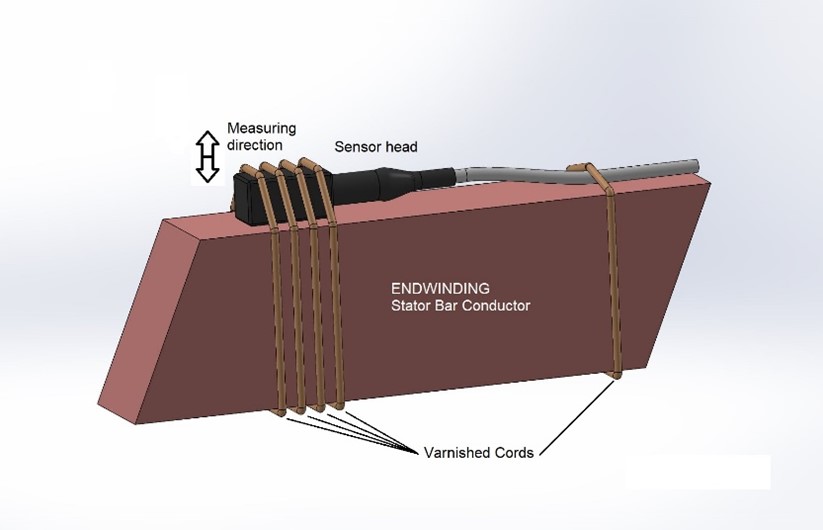
The sensor head is first glued to the chosen location using a quick-setting adhesive. This position is then reinforced by securing the sensor with varnished polyester cords to ensure stability. It’s essential to select the sensor placement based on the direction of vibration—radial, axial, or tangential.
This method has been proven effective across various installations, offering both reliability and ease of implementation.